
The outcome of a fire or explosion claim is often settled in the first three days, long before anyone writes a report. Those are the days when the scene is still intact and the evidence is still in place, and when one well-meant cleanup decision can make the cause impossible to prove. This guide walks adjusters, subrogation counsel, attorneys, and property owners through what to do, hour by hour, to keep the evidence and the claim intact.
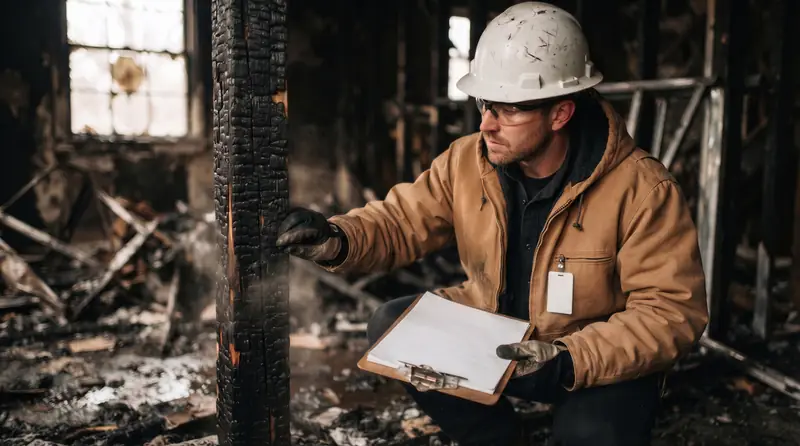
Spoliation is the “loss, destruction, or material alteration of an object or document that is evidence or potential evidence in a legal proceeding by one who has the responsibility for its preservation,” as defined in NFPA 921. After a fire or explosion, preventing spoliation is the first job, because a claim built on evidence nobody else had a chance to examine can be weakened or lost.
Why the First 72 Hours Matter
A fire scene starts changing the moment the fire is out. Firefighters overhaul the structure to find hidden hot spots, pulling ceilings, opening walls, and moving contents. Rain and wind wash and scatter debris. A building official may order an unsafe structure taken down. The owner wants the property secured and the business reopened, and restoration contractors are often on site within a day, ready to haul debris away.
Every one of those steps is understandable, and every one can destroy evidence. The burn patterns that show where a fire started, the appliance or electrical component that ignited it, and the gas fitting that leaked are physical evidence. Once it is moved, discarded, or altered, the questions that decide a claim may become unanswerable: where the fire started, what caused it, and who is responsible.
Evidence loss also creates its own legal problem. When a party responsible for preserving evidence lets it be lost or altered before others could examine it, a court can exclude evidence or expert opinions, or instruct a jury to assume the missing evidence was unfavorable. For a carrier pursuing subrogation, that can end the recovery before it starts.
Hours 0–24: Secure the Scene and Stop the Changes
The goal of the first day is simple: keep the scene as close as possible to how the fire left it, and capture what has already changed.
- Get the incident record. Get the fire department incident number and the name of the investigating agency. Ask what was moved, removed, or opened during firefighting and overhaul. That history tells the investigator which conditions are original and which are not.
- Secure the site. Fence it, board it, or post security, and keep a log of everyone who enters. An unsecured scene invites theft, vandalism, and well-meaning helpers who move things.
- Put cleanup on hold. Tell the owner, the restoration contractor, and the public adjuster, in writing, that nothing comes out of the area of origin until it has been examined. Limit work to what safety requires, such as shoring or making utilities safe, and photograph that work as it happens.
- Photograph everything. Work from the outside in: every side of the structure, then each room, before anything moves. Context photos matter as much as close-ups.
- Keep what has already been removed. If an appliance, a power strip, or a section of wiring was pulled out during overhaul, find it and keep it. It may still be the most important item in the case.
- Preserve electronic evidence. Ask for fire and intrusion alarm event logs, surveillance video, access-control records, and utility and smart-device data before they are overwritten. Many systems keep only a short rolling window.
Hours 24–48: Identify and Notify Interested Parties
A fire investigation is rarely a one-party exercise. If a product, a contractor's work, or a utility system may have caused the loss, the parties responsible for it have a right to see the evidence before it is disturbed. NFPA 921's guidance on legal considerations recommends notifying interested parties before an examination so they can attend. Giving that notice early, and in writing, is one of the most effective protections against a spoliation claim.
Interested parties commonly include:
- Manufacturers of appliances, equipment, and components in the suspected area of origin
- Contractors who installed, serviced, or recently worked on electrical, gas, HVAC, or plumbing systems
- The gas or electric utility, when service equipment may be involved
- Landlords, tenants, property managers, and their insurers
A useful notice letter states the date, location, and nature of the loss and the known extent of the damage. It explains why the recipient may be connected to the loss and describes the current condition of the scene. It also gives the proposed date of the joint examination, a date to respond by, and a contact for scheduling. Sending a letter does not settle a spoliation dispute on its own. A court can still ask whether the notice was clear and gave a reasonable chance to attend. That is why the content and timing of the notice matter.
Hours 48–72: Document, Examine, and Collect
With the scene secured and the interested parties notified, the investigation itself can proceed. The order of work matters, because each step removes some of what the step before it recorded.
Document before you dig
The scene is photographed, sketched, and measured before debris is moved. Fire patterns on walls, ceilings, and structural members are recorded in place, along with the position of contents, doors, windows, and anything that could show how the fire moved through the space.
Excavate in layers
Debris in the area of origin is removed in layers, much like an archaeological dig, so the investigator can see what sat where when the fire started. Items that fell from above can be told apart from items that were on the floor, and potential ignition sources are recovered in place rather than swept up with everything else.
Collect and seal evidence
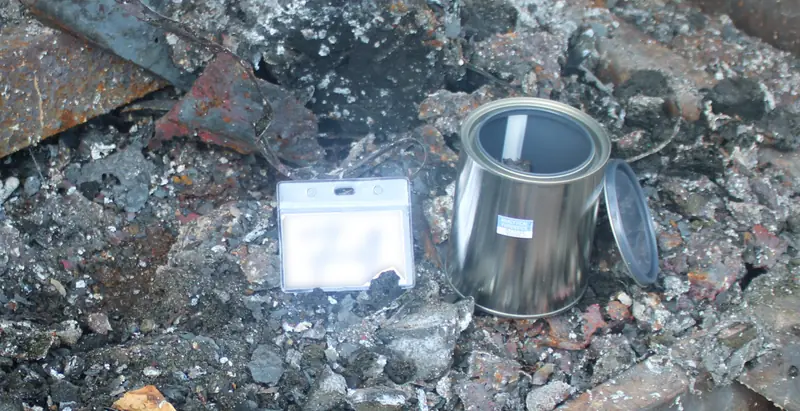
Evidence is labeled, photographed where it was found, and sealed in a suitable container. Debris that may hold ignitable liquid residue is sealed in clean, unused metal cans so volatile compounds are not lost before laboratory analysis. Every item is logged on a chain of custody record from the scene to the lab.
Agree on a protocol before destructive testing
A failed appliance, wiring harness, or gas control is not taken apart at the scene by one party. Components that need disassembly or testing go to a laboratory examination that every interested party is invited to attend, under a written protocol that all parties agree to beforehand. That protocol covers who handles the item, how each step is documented, and what testing is allowed.
What Is Different at an Explosion Scene
Explosion scenes add problems that a fire alone does not. The debris field can extend well beyond the building, and the distance and direction that fragments traveled help locate where the explosion happened. That only works if the field is mapped before anyone collects the debris.
When a fuel gas explosion is suspected, the gas system becomes central evidence. Valves, regulators, connectors, meters, and appliance controls should be left as they were found and documented before anyone operates them. Pressure testing and leak checks should be done with the utility and the other interested parties present, not on the first day by whoever gets there first. Explosion scenes can also carry structural collapse and hazardous-materials risks, so scene safety must be assessed before the investigation begins.
The Mistakes That Most Often Cost a Recovery
- Discarding the appliance or component that was in the area of origin, often because it “obviously” caused the fire.
- Letting cleanup start before the scene was documented and the other parties were notified.
- One party taking the evidence apart without notice to the others or an agreed protocol.
- Relying only on the fire department report. It is written for a different purpose and is not prepared for civil litigation.
- Waiting for a cause before giving notice. Notice belongs before the examination, not after the conclusion.
- Photographing only the damage, without the context photos that show how the scene fit together.
The 72-Hour Fire and Explosion Evidence Checklist
- Get the fire department incident number and ask what was moved or removed during overhaul.
- Secure the site with fencing or security, and log everyone who enters.
- Stop all cleanup, demolition, salvage, and repairs that are not required for safety.
- Photograph and video the entire property, outside to inside, before anything else moves.
- Keep every appliance, fixture, electrical component, and gas fitting from the area of origin, including anything already pulled out.
- Preserve electronic evidence: alarm and access-control logs, surveillance video, and utility and smart-device data.
- Identify every party that may be responsible, and send written notice before any examination or evidence removal.
- Schedule a joint scene examination, and agree on a protocol before any destructive testing.
- Collect, label, and seal evidence under a documented chain of custody.
How LaRovere Consulting Helps
LaRovere Consulting investigates fire and explosion losses for insurers, attorneys, and property owners, from the first scene visit through expert testimony. Scene work is led by Justin Weller, who brings 13+ years in Arizona law enforcement and eight years in the fire service to each investigation. That experience covers patrol, criminal and bomb investigation, firefighting, EMS, and hazardous materials response. He has more than 1,200 documented hours of fire, explosives, and related technical training, and has completed the FBI Post Blast Investigators School twice.
When the cause may involve a building system, such as wiring, an appliance, a gas line, or HVAC equipment, the scene work is paired with the firm's licensed Professional Engineers. The physical evidence and the engineering analysis are developed together, so the conclusions hold up under scrutiny.
Frequently Asked Questions
What is spoliation of evidence in a fire investigation?
NFPA 921 defines spoliation as the loss, destruction, or material alteration of evidence, or potential evidence, by the party responsible for preserving it. In a fire or explosion loss, that can mean discarding the appliance where the fire started, or letting a contractor clear the room of origin. It can also mean taking a component apart without giving other parties a chance to attend. A court can respond by excluding evidence or expert opinions, or by instructing the jury to assume the lost evidence was unfavorable.
How soon should a fire investigator be on scene?
As soon as the fire department releases the scene and it is safe to enter, ideally within the first day or two. Fire scenes change quickly. Weather, overhaul, demolition orders, salvage, and cleanup all alter or remove evidence. An investigator who arrives early can document the scene before it changes. They can also identify what needs to be preserved and help the carrier or owner give proper notice to other interested parties.
Who should receive notice before a fire scene examination?
Notice should go to every party whose product, work, or property may have played a role in the fire. That usually includes manufacturers of the appliances or equipment in the area of origin, and the contractors who installed or serviced building systems. It can also include the gas or electric utility, landlords and tenants, and their insurers. NFPA 921 recommends notifying interested parties before an examination so they can attend, which reduces the risk of a spoliation claim later.
Can cleanup or repairs start before the investigation is finished?
Only work required for safety should happen before the scene has been documented and the interested parties have had a reasonable chance to inspect it. Examples are shoring a wall or making utilities safe, and that work should be photographed as it is done. General cleanup, debris removal, and repairs can permanently destroy the evidence that shows where and how the fire started. Once the joint examination is complete and the evidence is collected, restoration can usually proceed.
Is the fire marshal's report enough to support a subrogation claim?
Usually not on its own. A fire marshal or other public fire investigator determines the origin and cause of the fire first, and then whether a crime may have occurred. That work is done as a public duty, often under tight time and resource limits. Their report is a useful starting point, but it is not prepared for civil litigation. A subrogation claim usually needs a full origin-and-cause investigation, evidence preserved to survive a spoliation challenge, and a report that can be defended under cross-examination.

About the Author
Justin Weller brings 13+ years in Arizona law enforcement and eight years in the fire service to LaRovere's fire and explosion investigations. He has more than 1,200 documented hours of fire, explosives, and related technical training, has completed the FBI Post Blast Investigators School twice, and holds Firefighter I and II and Fire Instructor I certification through the Arizona State Fire Marshal's Office.
Read Justin's full profile →